
Delve into the world of air conditioning maintenance checklist, where we explore crucial tasks and expert advice to ensure your system runs smoothly and efficiently.
From the significance of regular upkeep to the comparison between DIY and professional maintenance, this guide covers all you need to know to keep your air conditioner in top shape.
Air Conditioning Maintenance Checklist
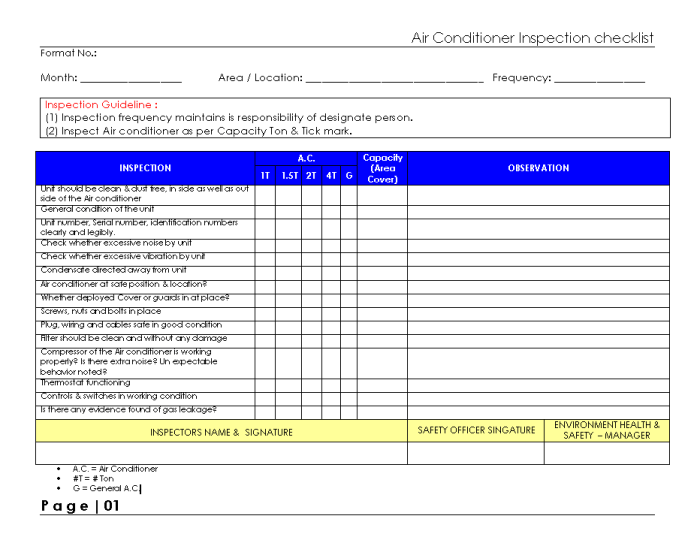
Maintaining your air conditioning system is crucial to ensure its efficiency and longevity. Regular maintenance not only helps in keeping your unit running smoothly but also improves its overall performance. Here is a checklist of essential tasks for maintaining air conditioning systems:
Importance of Regular Maintenance
- Regular maintenance helps in preventing costly repairs by addressing minor issues before they escalate.
- It improves the efficiency of the air conditioning system, leading to lower energy bills.
- Regular maintenance extends the lifespan of the unit, saving you money in the long run.
- Proper maintenance ensures better indoor air quality by keeping the system clean and free from dust and debris.
Frequency of Maintenance
- It is recommended to perform routine maintenance on your air conditioning unit at least once a year.
- Some tasks, such as replacing air filters, may need to be done more frequently, around every 1-3 months.
- Regular maintenance before the start of each cooling season can help in identifying and fixing any issues in advance.
DIY vs Professional Maintenance
- While some maintenance tasks can be done by homeowners, such as cleaning or replacing air filters, it is advisable to have a professional service the unit annually.
- Professional maintenance ensures a thorough inspection of the system, identifying any potential problems early on.
- DIY maintenance can help in keeping the system clean and functional between professional servicing.
Home Inspections
When it comes to maintaining property value, home inspections play a crucial role in identifying potential issues and ensuring that the property is in good condition. Whether you are a homeowner looking to keep your property well-maintained or a prospective buyer wanting to make an informed decision, home inspections are essential.
Common Issues Found During Home Inspections
- Electrical problems such as faulty wiring or outdated systems
- Plumbing issues like leaks, water damage, or poor water pressure
- Roof damage, including missing shingles or signs of water infiltration
- HVAC system malfunctions or lack of proper maintenance
- Structural issues such as foundation cracks or uneven floors
Tips for Preparing for a Home Inspection
- Clean and declutter your home to make it easier for the inspector to access all areas
- Fix any minor issues beforehand to show that the property has been well-maintained
- Provide documentation of any recent repairs or upgrades done on the property
- Be present during the inspection to address any questions or concerns the inspector may have
How Home Inspections Impact the Buying and Selling Process
- For buyers, home inspections provide valuable information about the condition of the property and can help in negotiating repairs or adjustments to the sale price
- For sellers, home inspections allow them to address any issues proactively and make necessary repairs to increase the property’s value
- Home inspections are a crucial step in the real estate transaction process, ensuring transparency and peace of mind for both buyers and sellers
Kitchen Improvements
When it comes to improving your kitchen, there are plenty of budget-friendly ideas that can make a big impact. From simple upgrades to creative storage solutions, enhancing your kitchen doesn’t have to break the bank.
Budget-Friendly Kitchen Improvement Ideas
- Painting cabinets or walls in a fresh coat of paint can instantly brighten up the space.
- Replacing cabinet hardware and faucet fixtures for a quick and easy update.
- Adding open shelving or hanging racks to display cookware and create more storage.
Comparison of Kitchen Countertop Materials
| Material | Pros | Cons |
|---|---|---|
| Granite | Durable and heat-resistant | Can be pricey |
| Quartz | Low maintenance and non-porous | More expensive than some other options |
| Laminate | Affordable and easy to clean | Not as durable as other materials |
Latest Trends in Kitchen Design
- Two-tone cabinets for a modern look.
- Integrated appliances for a seamless appearance.
- Statement lighting fixtures to add a touch of elegance.
Tips for Maximizing Storage Space
- Utilize vertical space with tall cabinets or shelves.
- Install pull-out drawers or organizers in cabinets for easy access.
- Use multi-functional furniture like kitchen islands with built-in storage.
Home Improvement and Furniture
When it comes to home improvement projects, the choice of furniture plays a crucial role in enhancing the overall look and feel of a space. The right furniture can complement the design, layout, and functionality of a room, while the wrong choice can disrupt the harmony and aesthetic appeal of a space.
Impact of Furniture Choice
Choosing sustainable furniture options can not only elevate the style of your home but also contribute to environmental conservation. Opting for eco-friendly materials like bamboo, reclaimed wood, or recycled plastic can reduce your carbon footprint and promote a healthier living environment.
Repurposing Old Furniture
Instead of discarding old furniture, consider repurposing them in your home improvement projects. With a little creativity and DIY skills, you can transform a worn-out piece into a stylish and functional addition to your space. Repainting, reupholstering, or repurposing furniture can give your home a unique and personalized touch.
Selecting Furniture for Home Decor
When selecting furniture for your home, it’s important to consider the existing decor style and color scheme. Choose pieces that complement the overall theme of the room and enhance the visual appeal. Mixing and matching different furniture styles can add depth and character to your space, creating a cohesive and inviting atmosphere.
Flooring
When it comes to choosing flooring materials for your home, there are several options available, each with its own set of pros and cons. Two popular choices are hardwood flooring and laminate flooring. Hardwood flooring is known for its timeless beauty and durability. It adds a sense of warmth and elegance to any space. On the other hand, laminate flooring is more budget-friendly and easier to install.
Hardwood Flooring vs. Laminate Flooring
- Hardwood flooring:
- Pros:
- Timeless beauty
- Durability
- Increases home value
- Cons:
- Expensive
- Requires maintenance
- Vulnerable to scratches
- Pros:
- Laminate flooring:
- Pros:
- Budget-friendly
- Easy installation
- Resistant to scratches
- Cons:
- Not as durable as hardwood
- Cannot be refinished
- May have a synthetic look
- Pros:
Maintaining and Cleaning Different Types of Flooring
- Hardwood flooring:
- Regularly sweep or vacuum to remove dirt and debris
- Use a damp mop with a hardwood floor cleaner for deeper cleaning
- Avoid using harsh chemicals or excess water
- Laminate flooring:
- Regularly sweep or vacuum to prevent scratching
- Use a damp mop with a laminate floor cleaner
- Avoid excessive water or steam cleaning
Impact of Flooring Choices on Home Aesthetics
Choosing the right flooring can significantly impact the overall aesthetics of your home. Hardwood flooring can create a sense of luxury and sophistication, while laminate flooring can provide a more modern and budget-friendly look. Consider the style and ambiance you want to achieve when selecting the flooring material for your space.
Furniture
When it comes to interior design, furniture plays a crucial role in shaping the look and feel of a space. The placement of furniture can greatly impact the functionality, flow, and overall aesthetic of a room. Whether you are working with a small living space or trying to achieve a specific design style, understanding how to arrange furniture effectively is key.
Importance of Furniture Placement in Interior Design
- Proper furniture placement can enhance the functionality of a room by creating designated areas for specific activities such as lounging, dining, or working.
- Strategic furniture arrangement can help maximize space and improve traffic flow, making the room feel more open and inviting.
- By carefully positioning furniture, you can create focal points within a room and highlight architectural features or design elements.
Tips for Arranging Furniture in Small Living Spaces
- Choose furniture pieces that are proportionate to the size of the room to avoid overcrowding and maintain a sense of balance.
- Utilize multipurpose furniture such as storage ottomans, sleeper sofas, or wall-mounted shelves to optimize space and functionality.
- Consider the layout of the room and experiment with different furniture arrangements to find the most efficient and visually appealing setup.
Choosing Furniture for Different Interior Design Styles
- For modern interiors, opt for sleek, clean-lined furniture pieces with minimal ornamentation to achieve a contemporary look.
- In traditional interiors, choose furniture with classic silhouettes, rich textures, and intricate detailing to create a timeless and elegant atmosphere.
- In eclectic interiors, mix and match furniture from different styles, eras, and materials to add visual interest and personality to the space.
Benefits of Multifunctional Furniture in Modern Homes
- Multifunctional furniture can help maximize space in small homes or apartments, providing versatile solutions for different needs and activities.
- By incorporating multifunctional pieces such as sofa beds, extendable dining tables, or storage ottomans, you can optimize functionality without compromising on style.
- With the rise of flexible living arrangements and remote work, multifunctional furniture offers adaptability and versatility to accommodate changing lifestyle demands.
Green Living
In today’s world, where environmental concerns are becoming more pressing, adopting green living practices at home can make a significant impact. By making eco-friendly choices in our homes, we can contribute to a healthier planet and improve our overall well-being.
Identify Eco-friendly Home Improvement Options
When considering home improvement projects, look for sustainable and eco-friendly options. This can include using recycled materials, installing energy-efficient appliances, and incorporating natural lighting and ventilation into your home design.
Discuss the Benefits of Incorporating Sustainable Practices
- Reduced carbon footprint
- Lower energy bills
- Improved indoor air quality
- Support for local eco-friendly businesses
Share Tips for Reducing Energy Consumption at Home
- Use programmable thermostats to regulate temperature
- Switch to LED light bulbs
- Unplug electronic devices when not in use
- Insulate your home properly to reduce heating and cooling needs
Explain the Impact of Green Living
By embracing green living practices, we can create a more sustainable future for ourselves and generations to come. It not only benefits the environment but also improves our health and well-being. Small changes in our daily habits can add up to a significant positive impact on the planet.
Interior Design and Decorating
When it comes to interior design and decorating, colors play a crucial role in setting the mood and atmosphere of a space. From warm and inviting tones to cool and calming shades, the color palette you choose can greatly impact the overall feel of a room.To create a cohesive interior design theme, it’s important to select a color scheme that ties all elements together.
Start by choosing a base color for the walls and larger furniture pieces, then add accent colors through smaller decor items like pillows, rugs, and artwork. Make sure these colors complement each other to create a harmonious look.Balancing functionality and aesthetics is key in interior design. While it’s important for a space to look visually appealing, it should also be practical and functional for everyday use.
Consider the layout of the room, the flow of traffic, and the needs of the occupants when designing a space that is both beautiful and usable.Lighting is another crucial aspect of interior design, as it can greatly impact the ambiance of a room. Natural light is always ideal, so try to maximize the amount of sunlight that enters the space.
Additionally, incorporate a mix of overhead lighting, task lighting, and accent lighting to create a well-lit and inviting environment.
Role of Colors in Interior Design
- Colors can evoke certain emotions and set the tone for a room.
- Warm colors like reds and oranges can create a cozy and energetic atmosphere.
- Cool colors like blues and greens are calming and serene.
- Neutral colors like whites and grays provide a versatile backdrop for any design style.
Creating a Cohesive Interior Design Theme
- Choose a color palette and stick to it throughout the space.
- Mix patterns and textures that complement each other.
- Repeat colors and patterns to create a sense of unity.
- Use a variety of scales in furniture and decor for visual interest.
Balancing Functionality and Aesthetics
- Consider the needs of the space and its occupants when choosing furniture and decor.
- Opt for furniture that is both stylish and practical, such as storage ottomans or multifunctional pieces.
- Create designated areas for different activities, such as a reading nook or a workspace.
- Keep the layout open and spacious to allow for easy movement and flow.
Importance of Lighting in Interior Spaces
- Lighting can enhance the mood and functionality of a room.
- Natural light is ideal for creating a bright and airy space.
- Layer different types of lighting to create depth and ambiance.
- Use dimmer switches to adjust the lighting levels according to the time of day and activity.
Bath and Shower
When it comes to bathrooms, the bath and shower are essential components that can greatly impact the overall look and feel of the space. From different types of showers and baths to the latest trends in bathroom design, here we explore various aspects to consider for creating a functional and stylish bathroom.
Types of Showers and Baths
- Standard Bathtub: The traditional choice for most bathrooms, offering versatility for bathing.
- Walk-In Shower: A popular modern option with easy accessibility and sleek design.
- Clawfoot Tub: Vintage-inspired tubs that add a touch of elegance to the bathroom.
Latest Trends in Bathroom Design
- Minimalist Fixtures: Clean lines and simple designs are in demand for a modern look.
- Smart Technology: Incorporating features like digital controls and LED lighting for convenience.
- Natural Elements: Using materials like stone and wood to create a spa-like ambiance.
Maintaining Cleanliness and Hygiene
- Regular Cleaning: Wiping down surfaces, scrubbing tiles, and disinfecting fixtures to prevent mold and mildew.
- Proper Ventilation: Ensuring good airflow to reduce moisture and prevent bacterial growth.
- Organized Storage: Keeping toiletries and cleaning supplies neatly stored to maintain a clutter-free space.
Creating a Spa-like Atmosphere
- Soft Lighting: Opt for dimmable lights or candles to create a relaxing ambiance.
- Aromatherapy: Using essential oils or scented candles to enhance the sensory experience.
House Plans
When it comes to designing a home, the layout and structure of the house plans play a crucial role in creating a functional and comfortable living space. Well-designed house plans not only enhance the aesthetic appeal of a home but also improve its overall functionality. Here, we will discuss the importance of well-designed house plans and share tips on customizing them to fit specific needs, optimizing space, and leveraging natural lighting and ventilation.
Importance of Well-Designed House Plans
- Well-designed house plans ensure efficient use of space and enhance the flow of the home.
- Properly planned layouts can maximize natural light exposure and ventilation, creating a more comfortable living environment.
- Thoughtfully designed house plans can accommodate specific needs and preferences, such as accessibility features or open-concept living spaces.
Customizing House Plans
- Work with a professional architect or designer to customize house plans according to your lifestyle, budget, and unique requirements.
- Consider adding or removing rooms, adjusting room sizes, or incorporating special features like a home office or outdoor living space.
- Personalize the design by choosing materials, finishes, and architectural details that reflect your style and taste.
Optimizing Space in House Plans
- Use smart storage solutions and built-in furniture to maximize space in smaller homes or rooms.
- Design multi-functional areas that serve multiple purposes, such as a guest room that can also function as a home office.
- Consider open-concept layouts to create a sense of spaciousness and connectivity between different areas of the home.
Impact of Natural Lighting and Ventilation
- Position windows strategically to allow for ample natural light while maintaining privacy and energy efficiency.
- Incorporate skylights, light wells, or glass doors to bring in more natural light and improve indoor air quality.
- Create cross-ventilation by placing windows and doors in a way that promotes airflow throughout the home, reducing the need for artificial cooling or heating.
Feng Shui
Feng Shui is an ancient Chinese practice that focuses on creating harmony and balance in living spaces. By following the principles of Feng Shui in home design, individuals can enhance the flow of positive energy, or chi, throughout their homes.
Benefits of Feng Shui in Home Design
- Improved energy flow: Feng Shui aims to remove blockages and obstacles in the home to allow energy to flow freely, promoting a sense of well-being.
- Enhanced comfort and relaxation: By incorporating Feng Shui practices, individuals can create a peaceful and calming atmosphere in their living spaces.
- Increased positivity: Feng Shui is believed to attract positive energy and opportunities, leading to a more fulfilling and prosperous life.
Tips for Arranging Furniture According to Feng Shui Principles
- Place the bed in a commanding position: In the bedroom, position the bed so that it has a clear view of the door but is not directly in line with it to promote a sense of security and restful sleep.
- Avoid clutter: Keep pathways clear and declutter spaces to allow energy to flow freely throughout the home.
- Balance elements: Incorporate a balance of the five elements – wood, fire, earth, metal, and water – in each room to create harmony and balance.
Creating a Harmonious Living Environment with Feng Shui
- Use mirrors strategically: Mirrors can reflect light and energy to brighten a space and create a sense of expansiveness.
- Add plants: Plants bring life and vitality to a space, purifying the air and promoting a sense of well-being.
- Fix any leaks: In Feng Shui, water represents wealth and abundance. Fixing leaks and ensuring good water flow in the home can enhance prosperity.
Heating and Air Conditioning
Heating and air conditioning systems play a vital role in maintaining a comfortable indoor environment throughout the year. It is essential to understand the different types of heating systems available for homes, the importance of regular maintenance, tips for improving energy efficiency, and troubleshooting common issues.
Types of Heating Systems
When it comes to heating your home, there are several options to choose from, including:
- Forced Air Systems
- Radiant Heat Systems
- Heat Pumps
- Electric Heating
- Gas Furnaces
Importance of Regular Maintenance
Regular maintenance of heating systems is crucial to ensure optimal performance and longevity. It can help prevent breakdowns, improve energy efficiency, and save money on utility bills.
- Change air filters regularly
- Clean vents and ducts
- Check for leaks or cracks in the system
- Schedule annual professional inspections
Improving Energy Efficiency
Improving energy efficiency in heating and air conditioning systems not only helps the environment but also saves money on energy bills. Here are some tips:
- Upgrade to a programmable thermostat
- Seal air leaks in windows and doors
- Insulate your home properly
- Maintain a consistent temperature
Troubleshooting Common Issues
When your heating or air conditioning system is not functioning correctly, troubleshooting common issues can help identify and resolve the problem before calling a professional. Some common issues include:
- Uneven heating or cooling
- Strange noises or odors
- Frequent cycling on and off
- Lack of airflow
As we wrap up this comprehensive discussion on air conditioning maintenance checklist, remember that a well-maintained system leads to a cool and comfortable living space, along with cost savings in the long run. Stay proactive and enjoy the benefits of a well-functioning air conditioner.
Key Questions Answered
How often should I change the air filters in my air conditioner?
It’s recommended to change air filters every 1-3 months, depending on usage and filter type.
Can I perform air conditioner maintenance on my own?
While basic tasks like cleaning can be DIY, it’s advisable to have professional maintenance at least once a year for thorough inspection.
What are the signs that indicate my air conditioner needs maintenance?
Signs include reduced cooling efficiency, strange noises, unusual odors, and increased energy bills.


